


Understanding the Simplicity of Fiber Laser Welding
The demand for efficient and high-quality welding solutions is increasing as industries look for ways to streamline production, reduce costs, and enhance the durability of metal components. Traditional welding methods, such as MIG and TIG welding, require significant skill and training. However, fiber laser welding machines have revolutionized the welding process, offering a user-friendly and efficient alternative.
Dato and Leapion Laser, a leading manufacturer of laser machinery since 2007, has been at the forefront of delivering advanced fiber laser welding solutions to businesses across various industries. Our machines are designed for ease of operation, precision, and efficiency, making them accessible even to operators with minimal welding experience.
The Advantages of a User-Friendly Fiber Laser Welding Machine
Minimal Learning Curve with Intuitive Operation
One of the key benefits of a fiber laser welding machine is its ease of use compared to traditional welding methods. Traditional welding techniques require years of experience to master, but fiber laser welding reduces the dependency on manual skill.
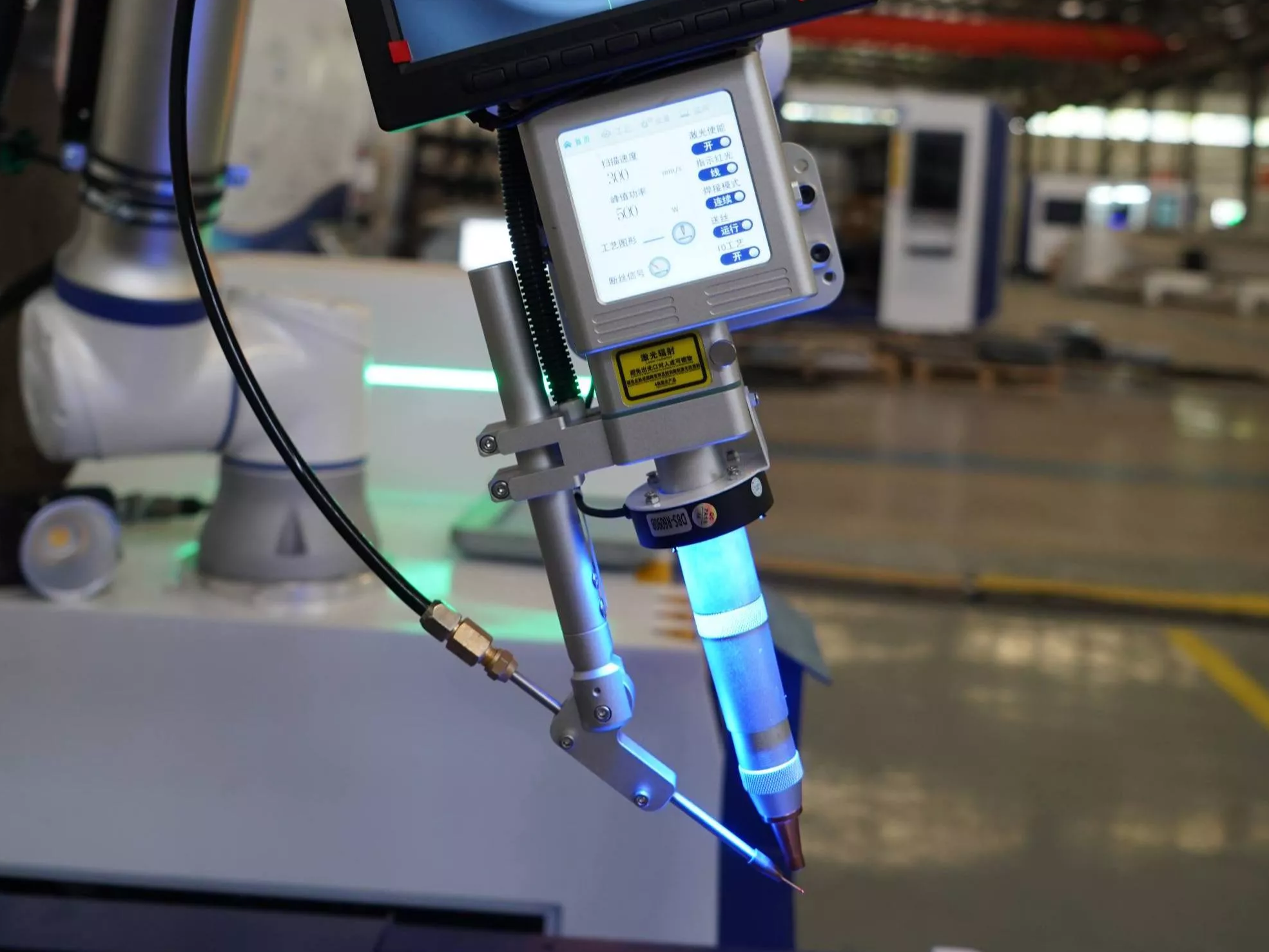
With a handheld laser welding system, operators can easily adjust welding parameters through an intuitive control panel. The machine's automated settings optimize power, beam focus, and speed, ensuring a smooth welding experience. Even for beginners, the process can be learned in just a few hours, significantly cutting down training time.
Handheld Flexibility for Precise Control
Unlike conventional welding methods that require fixed positions and specific welding angles, a handheld fiber laser welding machine provides greater flexibility. The ergonomic handheld torch allows operators to weld at different angles, reaching complex joints and hard-to-access areas with ease.
The precision of the laser beam ensures that each weld is strong, consistent, and aesthetically clean, reducing the need for post-processing work such as grinding or polishing. The lightweight and easy-to-maneuver design further enhances usability, allowing for comfortable long-term operation.
Automated Features for Seamless Operation
Modern fiber laser welding machines come with pre-programmed settings for different materials and thicknesses. These settings help operators achieve optimal welding quality without manually adjusting each parameter. Real-time monitoring and automatic adjustments ensure precision, reducing human error and enhancing overall welding consistency.
Additionally, the integration of laser wobble welding technology further simplifies the process by compensating for minor misalignments in the welding path, making it an ideal solution for both experienced professionals and newcomers to welding.

No Need for Extensive Post-Weld Cleanup
Traditional welding techniques often result in excessive spatter and rough weld seams that require additional grinding and finishing. Fiber laser welding, on the other hand, produces clean, smooth, and seamless welds that require little to no post-weld processing. This not only saves time but also reduces labor costs associated with secondary finishing operations.
Safety and Maintenance: Another Reason It’s Easy to Use
Reduced Heat Input for Safer Operation
Fiber laser welding machines generate a highly concentrated heat source, ensuring a minimal heat-affected zone (HAZ). Unlike traditional arc welding, which produces excessive heat and can lead to material warping or burns, fiber laser welding is much safer to use. This controlled heat input allows for stronger welds with minimal risk of material distortion.
Simple Maintenance and Long-Lasting Performance
Maintenance is another aspect that makes fiber laser welding easy to manage. Unlike traditional welding machines that require frequent replacement of electrodes, filler materials, or shielding gases, fiber laser welding machines operate with minimal consumables. The primary maintenance tasks include checking the protective lens, cleaning the laser source, and ensuring the cooling system is functioning correctly.
With long-lasting fiber laser sources, these machines provide years of reliable performance with minimal upkeep, making them a cost-effective investment for manufacturers.
Suitable for a Wide Range of Applications
The versatility of fiber laser welding machines makes them an attractive option for businesses across multiple industries. They are widely used in:
Automotive Manufacturing: For precise, high-strength welding of vehicle components.
Aerospace Industry: Ensuring lightweight yet durable joints in aircraft structures.
Electronics Production: For micro-welding applications requiring extreme accuracy.
Sheet Metal Fabrication: Providing seamless joints for a polished, professional finish.
Kitchen and Home Appliances: Welding stainless steel components with precision and minimal distortion.
Regardless of the industry, fiber laser welding is designed to be simple, efficient, and highly adaptable, making it an ideal choice for businesses looking to improve their welding processes without requiring extensive operator training.

Conclusion: Fiber Laser Welding is a Game-Changer for Ease of Use
For businesses seeking a fast, efficient, and easy-to-use welding solution, fiber laser welding machines are the perfect answer. With minimal training required, intuitive controls, handheld flexibility, and automated settings, operators can achieve high-quality welds with ease.
At Dato Leapion Laser, we specialize in developing user-friendly, industrial-grade laser welding machines that enhance productivity and deliver superior results. Whether you're new to laser welding or looking to upgrade your current welding technology, our machines provide the ideal balance of precision, efficiency, and ease of use.
Ready to experience the benefits of fiber laser welding? Contact us today for more information or to schedule a demo!
Related Blogs
-
 In 2026, more fabricators are investing in CNC press brakes, sheet metal bending machines, and other metal fabrication equipment to improve accuracy, increase output, and build more efficient production lines.During the September Sourcing Sale 2026, DATO LASER gives manufacturers and sheet metal worBlog
 -
 Why Manufacturers Are Buying Laser Welding Robots During The DATO LASER September Sourcing Sale 2026In 2026, manufacturers across the world are accelerating investments in laser welding robots, robotic laser welding systems, and other forms of smart manufacturing equipment to improve welding precision, reduce labor dependency, and build more efficient production lines.During the September SourcingBuyer's Guide
 -
 DATO LASER Launches September Sourcing Sale with Up to 15% DiscountDATO LASER is proud to announce its September Sourcing Sale, running throughout the New Trade Festival period. This limited-time promotion offers customers up to 15% off on selected laser welding systems and CNC press brakes, along wBuyer's Guide
 -
 Choosing a robotic welding system is not simply a choice between one robot brand and another. The right solution depends on your part size, weight, weld type, batch volume, changeover frequency, available floor space and required automation level.For many small and medium-sized metal fabrication shoBuyer's Guide
