


A laser welding robot can help a sheet metal factory produce repeatable welds and reduce manual handling. But the best system is not simply the one with the highest laser power or the longest robot reach. It is the one that can weld your parts, at the required quality and production rate, within a safe and practical workflow.
If you are comparing robotic laser welding systems, use the following seven questions to turn a promising demonstration into a sound equipment decision.
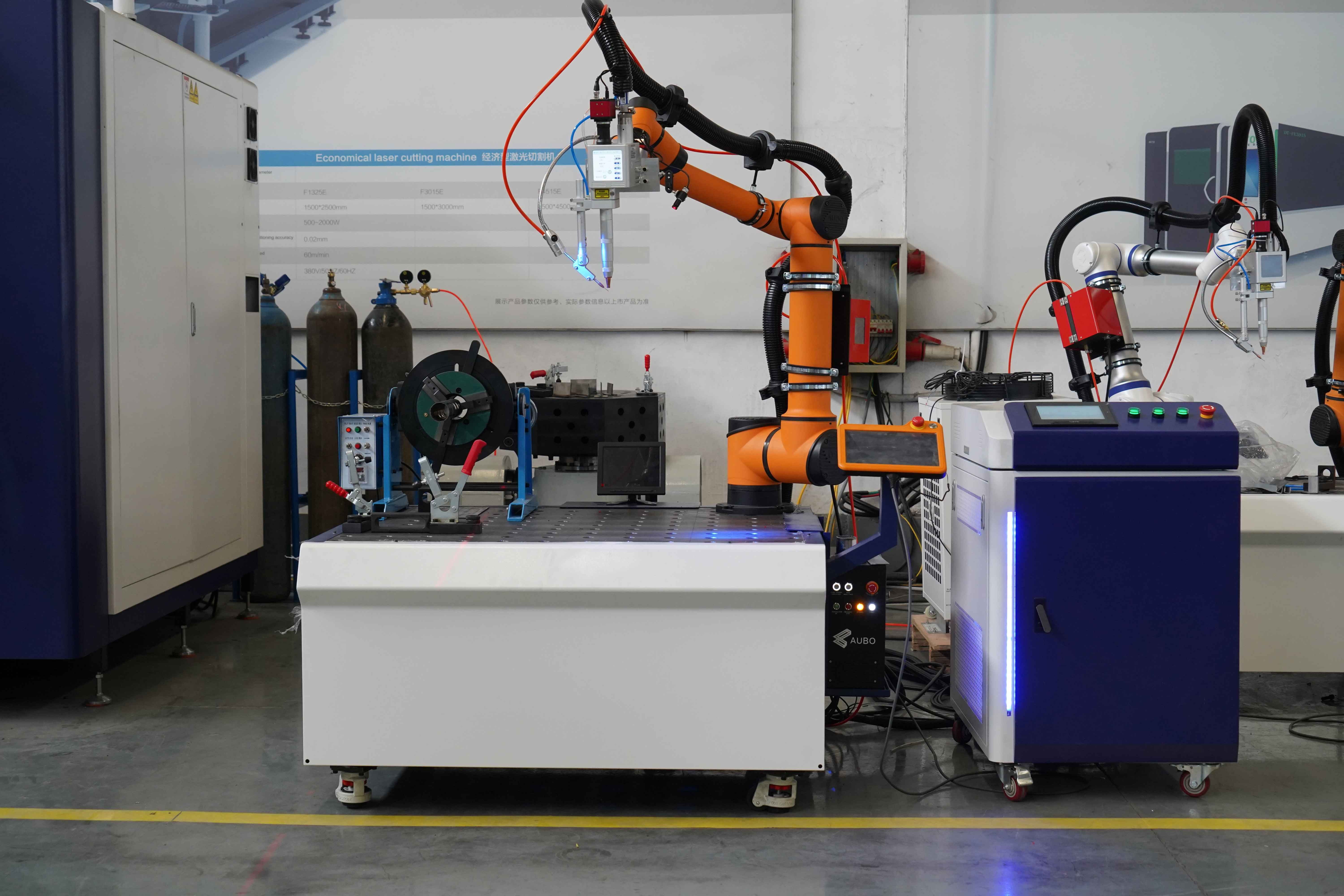
Which Parts Will the Robot Weld?
Start with a defined group of parts rather than a general goal to “automate welding.” Record each part’s material, thickness, joint design, dimensions, weld length, annual volume, and quality requirements. Identify whether the robot will process one stable product or a mix of parts that change frequently.
This distinction matters because the welding cell includes more than a robot and laser. Fixtures, access to the joint, part loading, and program changeovers all affect whether automation will save time in daily production.
Ask suppliers: Which of our current parts are suitable for the proposed cell, and which would require a different joint design or production method?
Can the Process Handle Your Material and Joint Conditions?
Laser welding concentrates energy into a narrow area. This can be valuable when heat input and distortion need careful control, but the process also requires attention to joint fit-up, surface condition, and positioning. A weld demonstrated on a prepared sample may not represent parts arriving from your normal cutting and bending operations.
Share real production samples with potential suppliers—including parts at the limits of your normal dimensional tolerances. If your product range includes different metals, coatings, or thicknesses, ask for trials that reflect those variations. Establish the acceptance criteria before testing: appearance alone may not be enough if weld strength, penetration, or leak tightness matters.
Ask suppliers: What fit-up and surface conditions does the recommended process require, and how will we verify weld quality on our parts?
Is the Robot and Fixture Layout Right for the Job?
Robot reach is only one layout consideration. The welding head must approach each seam at a usable angle without colliding with the part, fixture, enclosure, or other equipment. The cell must also allow operators to load and unload parts safely and consistently.
For multi-part production, discuss how fixtures and programs will be changed. A cell with a fast weld cycle may still create a bottleneck if operators spend too long locating parts or switching setups.
Ask suppliers: Can you show the proposed cell layout, including loading access, fixture locations, maintenance clearance, and the robot’s path to every weld?
What Does a Realistic Production Cycle Look Like?
Compare complete cycle time, not welding speed alone. A useful estimate includes part loading, clamping, robot movement, welding, unloading, inspection, and changeovers. It should also account for how many acceptable parts the cell is expected to produce—not just how quickly the laser can complete a seam.
Request a trial using your parts and your proposed inspection criteria. When reviewing results, note whether the test relied on unusually careful preparation or manual adjustments that would be difficult to maintain during a normal shift.
Ask suppliers: What was included in the quoted cycle time, and what assumptions were made about staffing, changeovers, and part consistency?
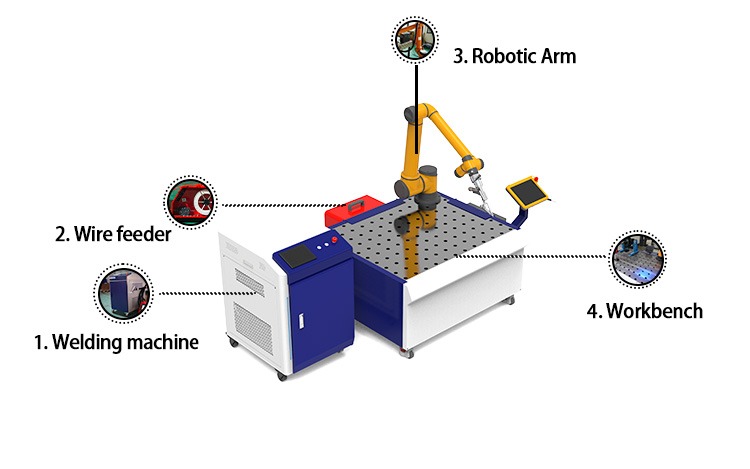
How Will Safety Be Designed Into the Cell?
Industrial laser welding requires a safety plan appropriate to the laser and the completed installation. Depending on the system, this may involve protective enclosures, interlocked access points, suitable viewing arrangements, fume extraction, emergency stops, and operator training. Welding fumes and other process hazards also need to be assessed for the materials being processed.
Safety should be discussed during cell design—not added after a layout has been approved. Confirm who is responsible for the risk assessment, safeguarding design, installation checks, and operator instructions under the rules applicable at your site.
Ask suppliers: What safeguards are included in the quotation, and which site-specific safety responsibilities remain with us or the system integrator?
Will the System Fit Your Existing Workflow?
A robotic welding cell needs reliable upstream parts and a clear downstream inspection process. Review the tolerances coming from laser cutting, bending, and assembly. Decide how parts will be identified, how welding programs will be selected, and what operators should do when a part is out of tolerance.
If you plan to connect the cell to other equipment or production software, specify those requirements early. “Automation-ready” does not necessarily mean that every interface you need is included in a standard quotation.
Ask suppliers: What inputs, outputs, data connections, and operator tasks are included in the proposed configuration?
What Is the Total Cost of Ownership?
Purchase price is only part of the investment. Compare quotations on a like-for-like basis, including fixtures, guarding, extraction, installation, training, consumables, maintenance, spare parts, and any work needed to prepare your site. Clarify warranty terms and the process for obtaining technical support.
Also consider the expected value of the cell: the number of parts it can process, the labor it may free for other work, scrap or rework rates, and the flexibility to handle future products. Base the business case on tested assumptions rather than a single headline speed figure.
Ask suppliers: Which items and services are included, which are optional, and what information do you need to estimate ongoing operating costs?
A Practical Checklist Before You Request a Quote
To receive a useful recommendation, prepare:
Drawings and photographs of representative parts
Material types, thicknesses, and surface conditions
Joint designs and required weld locations
Expected production volumes and product mix
Quality requirements and inspection methods
Available floor space and site utility information
Current production challenges, such as distortion, rework, or labor-intensive setups
The more accurately this information reflects daily production, the easier it is to compare proposed solutions.
Work With DATO LASER on an Application-Based Solution
The right laser welding robot should be selected around the application—not the other way around. DATO LASER can review your part requirements and discuss a suitable robotic welding configuration, including the questions that should be resolved through sample testing and cell planning.
Explore the Laser Welding Robot Series, browse other fabrication equipment, or contact DATO LASER with your drawings and production requirements to start a technical discussion.

Frequently Asked Questions
Is a laser welding robot suitable for small-batch production?
It can be, particularly when parts share fixtures or welding programs. Frequent changeovers and highly variable parts may reduce the benefit, so evaluate complete cycle time and setup effort before deciding.
Do I need to change my part design for robotic laser welding?
Not always. However, joint access, fit-up, and fixturing may limit which designs can be welded reliably. A review of production drawings and physical samples is the best starting point.
Should I choose the highest-power laser available?
Not by default. Laser power should be selected alongside material, thickness, joint design, required quality, and process stability. Ask suppliers to demonstrate a configuration that meets your acceptance criteria.
What is the best way to compare suppliers?
Give each supplier the same part information and acceptance criteria. Then compare sample weld results, complete cycle times, cell layouts, safety provisions, scope of supply, and support terms—not machine specifications alone.
Related Blogs
-
 Laser Welding Robot vs. Handheld Laser Welder: Which Fits Your Production?Should your factory invest in a laser welding robot or a handheld laser welder? Both use a laser to join metal, but they solve different production problems. A handheld system gives an operator direct control over the weldingBuyer's Guide
-
 How to Calculate Laser Welding Robot ROI for a Sheet Metal FactoryA laser welding robot may improve consistency and increase output, but those benefits do not automatically make it a profitable investment. For a sheet metal factory, the decision depends on the parts being welded, the volume of repeaBuyer's Guide
-
 A laser welding robot can help a sheet metal factory produce repeatable welds and reduce manual handling. But the best system is not simply the one with the highest laser power or the longest robot reach. It is the one that can weld your parts, at the required quality and production rate, within a sBuyer's Guide
-
 A sheet metal part can be cut accurately and still fail during assembly if its bends are inconsistent. An incorrect angle, misplaced flange, or small dimensional variation may affect fit-up, create rework, and delay the next production step.For workshops handling repeated parts or a growing mix of oBuyer's Guide
