Good candidate
The bevel is part of a reviewed design, the edge can be cut in one controlled program, and the assembly benefits from improved fit-up or fewer interfering clamps.
This bar serves to notify visitors of important updates


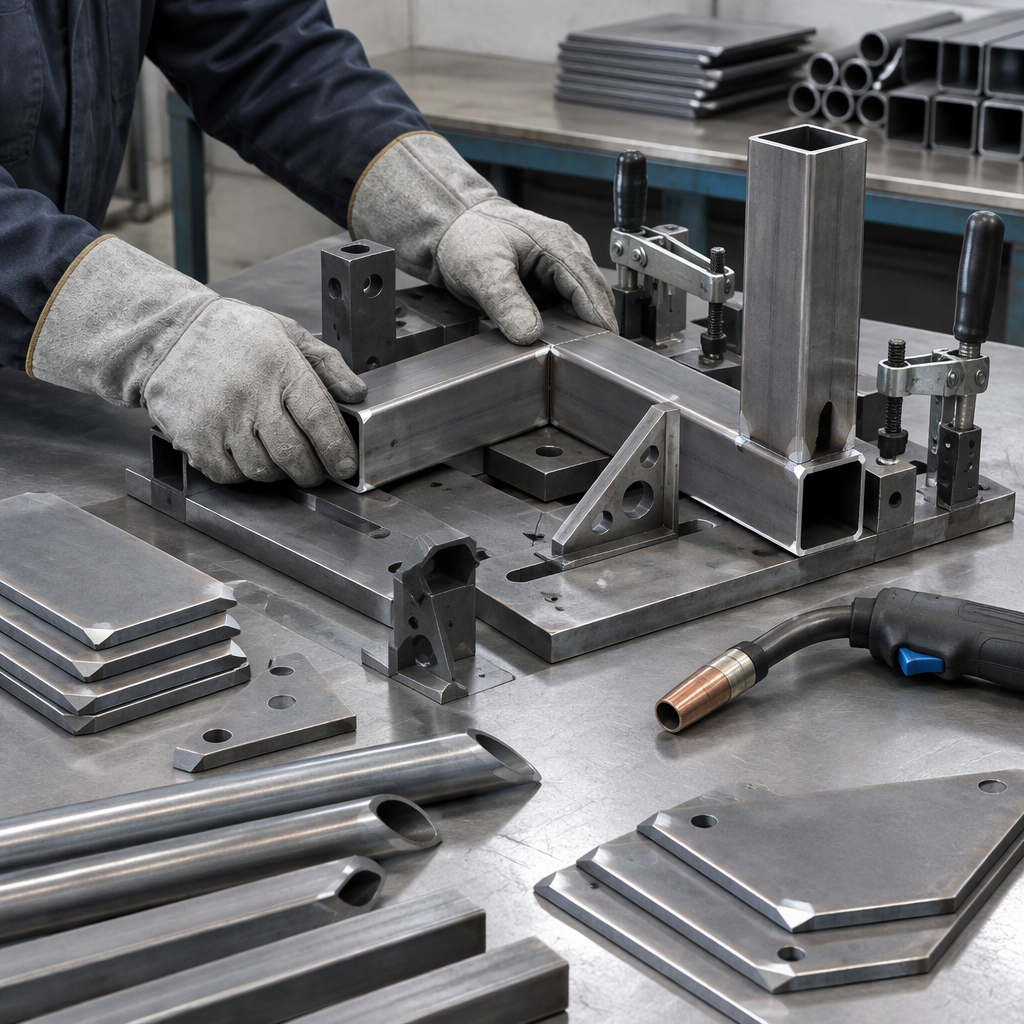
Bevel laser cutting helps most when the bevel is part of the required weld geometry, the design can use that edge directly in assembly, and eliminating a separate edge-preparation station will not compromise fit-up or welding access.
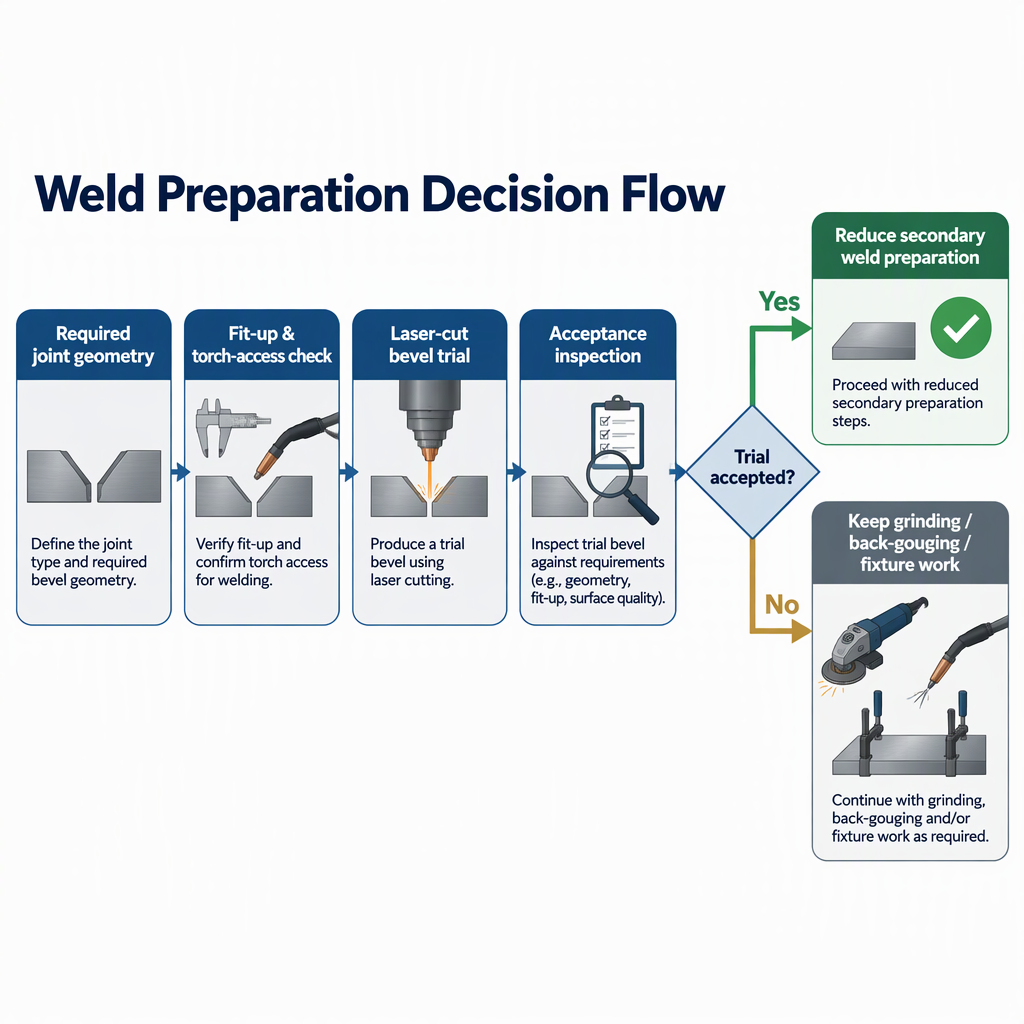
The starting question is not whether a machine can tilt a cutting head; it is whether the joint still gives the welder access, electrode or torch angle, arc-length control and root-pass control. TWI’s guidance on weld joint design and edge preparation explains why bevel and root-gap choices affect fusion and control at the root.
| Buyer condition | Bevel laser cutting is more attractive when... | Keep it as a trial item when... |
|---|---|---|
| Weld design | The required bevel, root face and root gap can be held without later reshaping. | The groove still needs backing, back-gouging or additional access work. |
| Assembly fit-up | Cut features support direct fit-up, positioning or tab-and-slot assembly. | Clamps, tabs or slots still interfere with access and need redesign. |
| Process economics | A reviewed part design can remove several separate preparation steps. | The bevel is only a decorative edge or a low-volume exception. |
The operations most likely to drop are separate bevel machining, manual grinding for weld preparation, some fit-up correction and some fixture interference work, but only where the cut edge already meets the weld and assembly requirement.
| Secondary operation | Why it may reduce | What still needs confirmation |
|---|---|---|
| Separate edge beveling | The bevel can be created during the cutting step. | Angle, land and root-gap suitability for the weld procedure. |
| Manual weld-prep grinding | Correct groove geometry can reduce the need to reshape an edge before welding. | Whether the weld still requires local dressing, backing or back-gouging. |
| Fit-up correction | Laser-cut bevels and reviewed features can improve fit-up and positioning. | Whether slots, tabs and clamps still create assembly conflicts. |
| Fixture changes | Some slot and tab designs can reduce interfering clamps. | Whether the actual assembly sequence still leaves tool and torch access. |
Before requesting a bevel laser cutting quote, define the weld joint geometry and acceptance method clearly enough that the supplier is not guessing the bevel angle, root face, root opening or access requirement.
Bevel cutting will not remove later work when weld access, groove condition, inspection or assembly tolerance still requires a downstream operation.
The bevel is part of a reviewed design, the edge can be cut in one controlled program, and the assembly benefits from improved fit-up or fewer interfering clamps.
The joint still depends on backing, back-gouging, local dressing, or groove inspection before welding can proceed.
Bevel laser cutting can support better fit-up when bevels, tabs and slots are designed together so the part locates cleanly and leaves access for welding.
A useful RFQ should give the supplier enough part, material, joint and acceptance data to prove whether bevel laser cutting reduces work in your specific workflow.
Before production use, verify the bevel on real material and include laser-cutting hazards, ventilation, operator training and acceptance inspection in the trial plan.
Choose bevel laser cutting when the bevel is a verified part of weld preparation and assembly fit-up, not when it is only an assumed shortcut.
These buyer questions help separate realistic bevel laser cutting applications from assumptions that still need a trial.
It can reduce grinding when the cut bevel already satisfies the weld-preparation requirement, but grinding may remain where the groove needs local dressing, access correction or inspection preparation.
No. The same application logic can apply to sheet, plate or tube assemblies when the bevel, tabs, slots and weld access are designed together.
The most important data are material, thickness, bevel geometry, root face, root gap, weld process, access limits and the inspection or acceptance method.
It can help when tabs, slots and bevels improve positioning or reduce clamp interference, but the assembly sequence must be checked on representative parts.
No. Savings depend on the part design and the operations being replaced, so use trial coupons and current-operation comparisons instead of a universal percentage.
Check ventilation, fire and burn controls, eye and skin protection, machine guarding, electrical safety, noise exposure, operator training and laser-safety oversight for the actual cutting area.