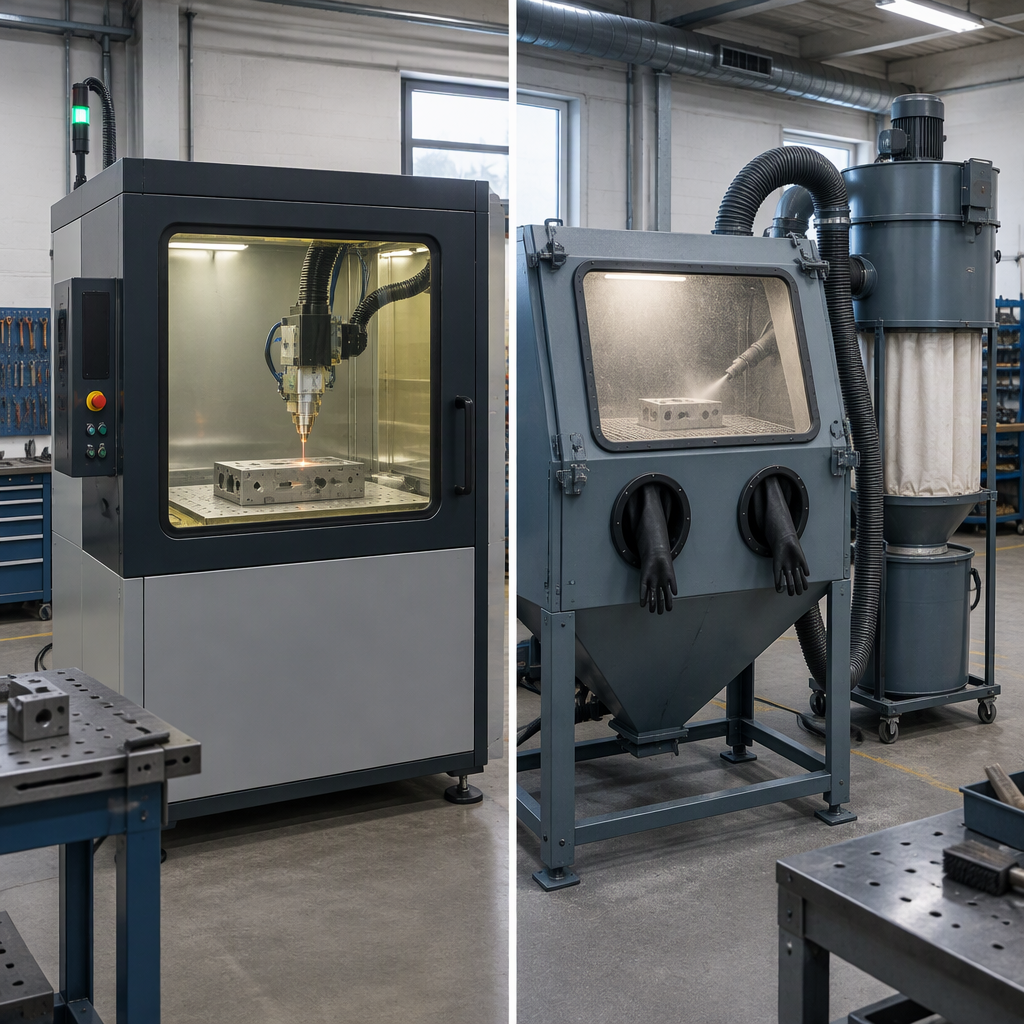
Laser cleaning vs abrasive cleaning is not a universal winner decision. Choose by surface condition, job objective, containment limits and acceptance testing: abrasive cleaning is a mechanical impact process that can clean or texture surfaces but can create dust and media-control duties, while laser cleaning is parameter-sensitive and should be proven on representative samples before purchase.
Laser cleaning path
A pulsed laser cleaning process should be evaluated as a controllable parameter window; a 2025 study of nanosecond pulsed laser rust cleaning reported that outcomes depended on power, scan speed, pulse repetition rate and hatch distance.
Abrasive cleaning path
NIOSH describes abrasive blasting as accelerating grit-sized particles with compressed air to clean or texture surfaces, and notes that dust can come from the abrasive, coating or substrate.
How the two cleaning methods differ
Laser cleaning applies controlled laser energy to a surface, while abrasive cleaning applies abrasive particles by force; the practical difference is whether the job needs a parameter-controlled thermal process or a mechanical cleaning and texturing process.
Laser cleaning
For rust cleaning on steel, research has shown that the visible result can change with laser power, scan speed, repetition rate and hatch distance, so a buyer should treat the method as a process-development choice rather than a plug-in replacement for every abrasive job.
Abrasive cleaning
29 CFR § 1910.94 defines abrasive blasting as forcible application of an abrasive to a surface by pneumatic pressure, hydraulic pressure or centrifugal force.
That mechanical action can clean or texture the surface, but the same process can generate dust from the media, coating and substrate.
For procurement, compare the two methods under the same workpiece material, contaminant, target finish, production rhythm and required downstream step. Do not compare a laboratory laser sample with an uncontrolled blasting job, or a full blasting enclosure with a hand-held laser trial.
Which surfaces are better candidates for laser cleaning?
Laser cleaning is a better candidate when the buyer can define a narrow surface objective, protect the substrate and prove the required finish through sample trials.
The key boundary is process sensitivity: in the cited rust-cleaning study, an acceptable shiny surface appeared only inside a feasible parameter region, not across every tested setting.
That makes laser cleaning attractive to evaluate for controlled rust, oxide, coating or localized contamination removal where the factory wants repeatability and less loose abrasive media in the work area. It also means the purchasing team should avoid unsupported assumptions about speed, heat effect, surface roughness or coating adhesion. Ask for sample coupons that represent the actual base material, thickness, contamination layer and downstream operation.
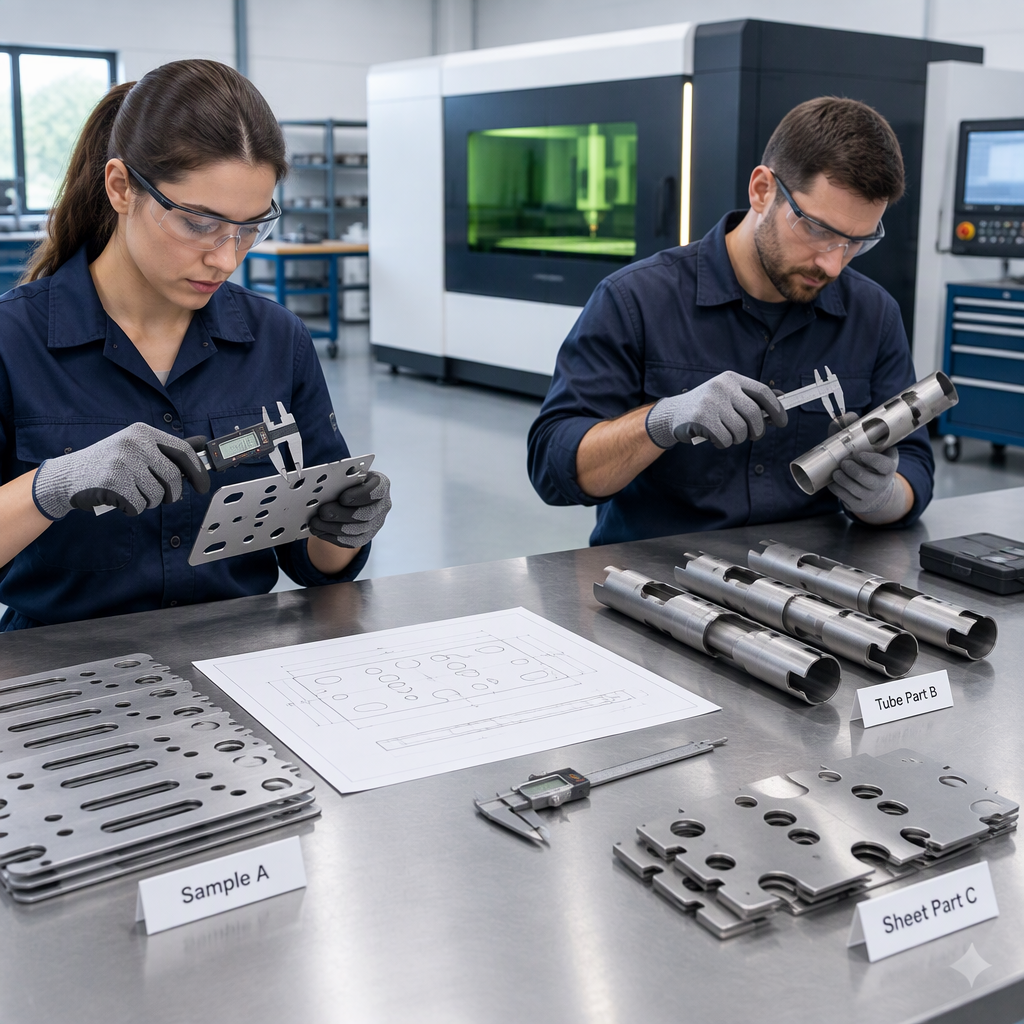
If the workpiece includes thin sheet metal, tube profiles, edges, weld areas or mixed finishes, include the most sensitive zones in the trial. A smooth-looking sample is not enough; the acceptance plan should check whether the cleaned surface is ready for welding, painting, cutting, marking or assembly.
Which jobs are better candidates for abrasive cleaning?
Abrasive cleaning is a better candidate when the job intentionally needs mechanical removal, surface profiling or large-area preparation and the facility can manage dust, media and enclosure requirements.
NIOSH describes abrasive blasting as a process that cleans or textures surfaces by accelerating grit-sized particles, so its fit is strongest where mechanical impact and profile creation are part of the job requirement.
The same job can introduce health and safety concerns, including lung risks from dust, lead particles when removing lead-based paint, and setting-dependent risks such as falls, confined spaces and physical injury.
For a fabrication buyer, abrasive cleaning may remain practical where the work is heavy, the target is a roughened anchor profile, or the cleaning area is too large for the available laser process window. The selection boundary is not only surface quality; it includes how media will be stored, recovered or disposed of, how parts will be fixtured, and how dust will be isolated from cutting, welding, bending and inspection areas.
Why the process window matters before purchase
Laser cleaning should be purchased only after the buyer sees a process window that works on representative samples, because surface results can change when laser parameters change.
- Define the contaminant: rust, oxide, paint, oil, weld discoloration or mixed residue.
- Define the substrate: material grade, thickness, surface finish, heat sensitivity and critical dimensions.
- Request trials across relevant parameter ranges, because the Springer article on nanosecond pulsed laser rust cleaning reports dependence on power, scan speed, pulse repetition rate and hatch distance.
- Inspect the surface after cleaning under the same criteria the production team will use for acceptance.
- Test the next operation, such as coating, welding, marking, cutting or assembly, instead of judging only by appearance.
Safety, dust and containment checks
Safety can change the method choice because abrasive cleaning can require dust, ventilation, enclosure and exposure controls, while any laser-cleaning proposal should be reviewed against the supplier’s current safety documents and the buyer’s own EHS rules before operation.
- For abrasive cleaning, identify whether dust can come from the abrasive, coating or substrate; NIOSH highlights all three sources in abrasive blasting.
- Where media or substrates may contain crystalline silica, review respirable crystalline silica exposure controls because CDC/NIOSH identifies abrasive blasting among exposure activities.
- If old coatings may contain lead, treat removal as a lead-particle risk and plan exposure controls before production.
- For U.S. reference only, 29 CFR § 1910.94, Title 29 CFR ventilation text reproduced by Cornell LII, includes provisions for abrasive-blasting ventilation, dust control, enclosures and air supply; confirm the adopted edition and any local amendments with the local building department and the responsible safety authority.
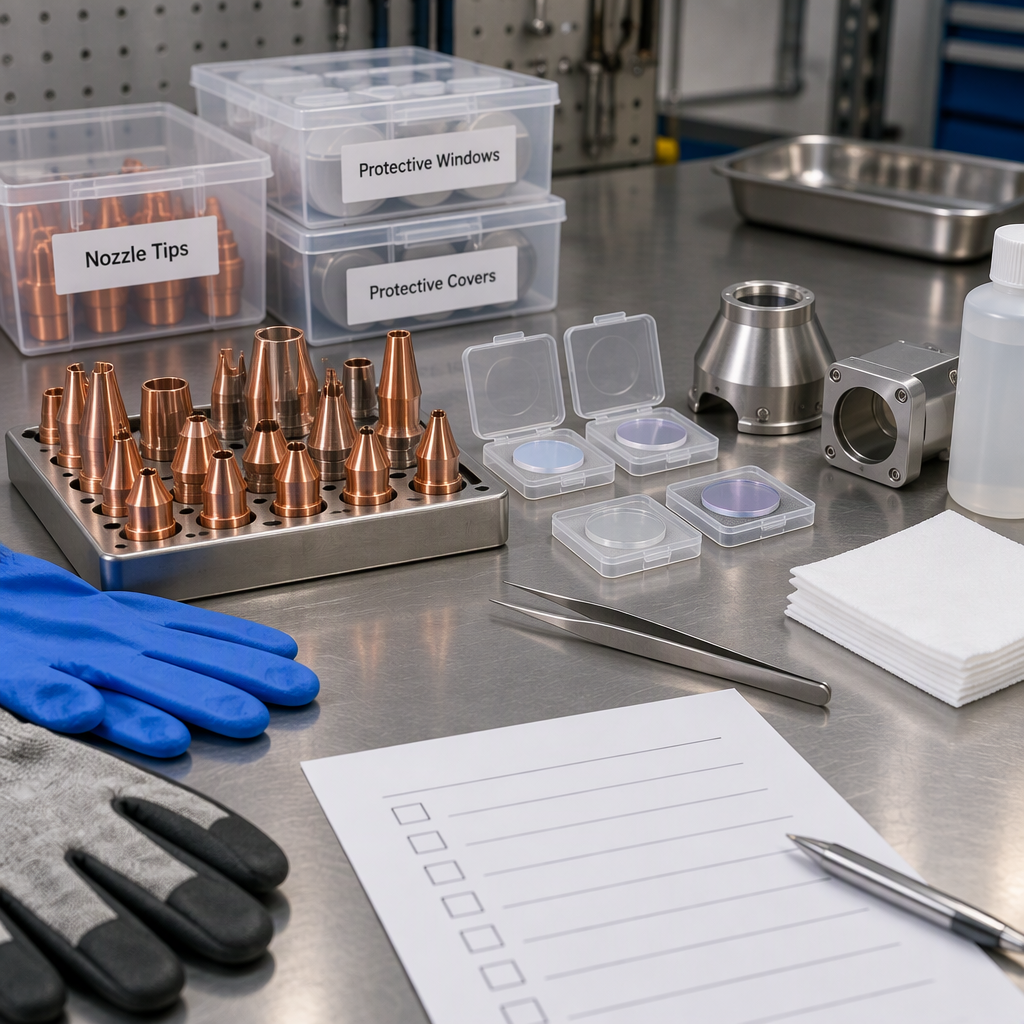
- For laser cleaning, ask the equipment supplier for the official safety instructions, proposed operating layout, required protective measures, maintenance limits and operator-training requirements for the exact configuration quoted.
Do not treat either process as automatically clean or automatically safe. The correct control package depends on the contaminant, substrate, workpiece geometry, enclosure, operator position and local rules.
CCOHS describes laser hazards in a health-care context as including beam hazards and non-beam hazards such as fumes from materials exposed to laser beams; for industrial cleaning procurement, use that as a prompt to request configuration-specific safety documents rather than as a substitute for local rules or the supplier’s manual.
NIOSH abrasive blasting guidance is useful background for dust and hazard screening in abrasive jobs.
CDC/NIOSH silica guidance is especially relevant where crystalline silica exposure may be present.
For general laser-hazard background, buyers may also review the CCOHS laser hazard overview and then confirm the industrial cleaning requirements that apply to their site.
Cost factors to compare without guessing payback
The cheaper method cannot be selected from equipment price alone; compare the full cost boundary for the same surface, throughput target, safety controls and acceptance standard.
| Cost item | Laser cleaning questions | Abrasive cleaning questions |
|---|
| Equipment and integration | Is the system manual, enclosed, robotic or integrated with a line? | Is the job cabinet, booth, blast room or field work? |
| Consumables | What optics protection, filters and extraction consumables are expected? | What abrasive media, nozzle wear, recovery and disposal are expected? |
| Labor and handling | How much fixturing, programming and part positioning are required? | How much masking, loading, media handling and cleanup are required? |
| Safety and environmental controls | What safety package, extraction and access-control measures are included in the quoted configuration? | What ventilation, dust collection, respiratory protection and enclosure are needed? |
| Quality cost | Does the cleaned surface pass downstream coating, welding or inspection? | Does the blasted surface meet profile, cleanliness and contamination limits? |
Ask suppliers to quote the same workpiece, contamination level, duty cycle and acceptance test. Without those shared assumptions, a payback comparison is only a guess.
Selection checklist for sheet-metal and tube-processing factories
Prepare material, thickness, workpiece size, production volume, automation needs, surface condition and acceptance criteria before asking for a cleaning recommendation.
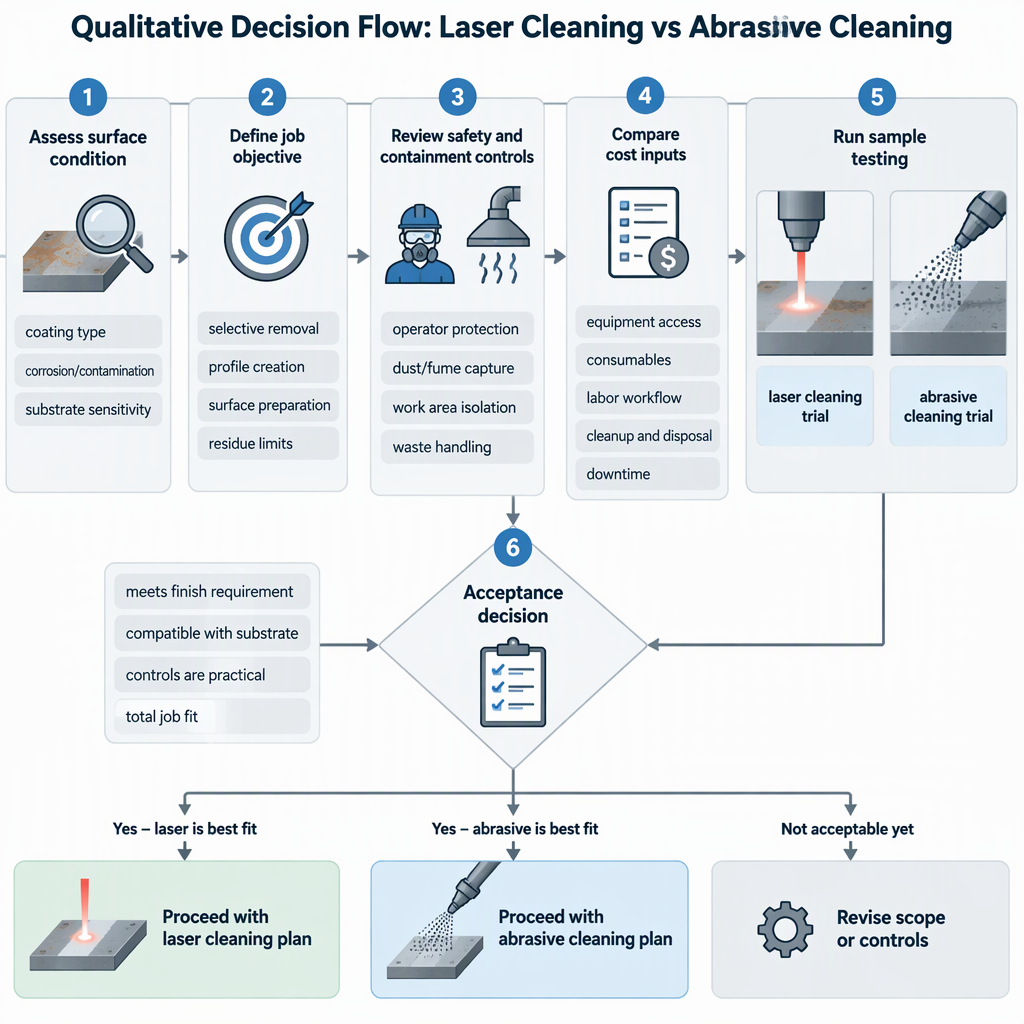
- DATO Laser states that equipment selection depends on material, thickness, workpiece size, production volume and automation requirements.
- State whether the job is sheet metal, tube, welded assembly, formed part, repair work or pre-coating preparation.
- Describe the contaminant layer: rust grade, oxide, paint, oil, weld discoloration or mixed residue.
- Define the goal: remove contamination, create a surface profile, preserve base finish, prepare for coating or prepare for welding.
- Give the production pattern: batch size, part mix, takt time target, available floor space and handling method.
- For laser cleaning, ask the supplier to show the parameter window used for your sample, because results can depend on power, scan speed, repetition rate and hatch distance.
- For abrasive cleaning, ask how media, dust, enclosure, ventilation and waste handling are included in the proposal.
Use this checklist to make supplier discussions specific. A useful recommendation should connect the cleaning method to your material, surface condition, production flow and inspection criteria.
Sample test and acceptance plan
Before purchase, test representative parts and approve the method only when the cleaned surface passes the next production step, not just a visual check.
| Test item | Why it matters | Pass condition to define |
|---|
| Representative sample | Thin sheet, tube, welds and edges can respond differently. | Use actual material, thickness and contamination. |
| Parameter record | Laser-cleaning results can depend on power, scan speed, repetition rate and hatch distance. | Record the parameters used for each approved sample. |
| Surface cleanliness | Remaining residue can affect coating, welding or marking. | Define the inspection method before the trial. |
| Substrate effect | The base material must not be damaged beyond the application limit. | Check appearance, dimensions and functional surface needs. |
| Downstream operation | A clean-looking surface may still fail the next step. | Run coating, welding, cutting, marking or assembly checks as applicable. |
| Repeatability | Procurement needs more than one good sample. | Repeat on multiple parts from normal production variation. |
Where DATO fits in the evaluation
DATO Laser can be considered as a supplier for laser equipment categories, including laser cleaning machines, but buyers should confirm current model data, configuration details and sample results for their own job.
DATO Laser lists laser cutting, welding, cleaning, marking, robotic welding and CNC bending solutions for metal manufacturing applications.
For a useful quotation, ask DATO Laser to connect the proposed equipment selection to your material, thickness, workpiece size, production volume and automation requirements.
For a buyer, the practical next step is to share drawings, photos, contamination details and acceptance criteria, then request a proposal that separates machine configuration, safety package, extraction, automation, test method and after-sales requirements. Keep performance approval tied to your sample parts and written acceptance criteria, not to a general category description.
Conclusion
Choose laser cleaning when a tested parameter window meets the surface target; choose abrasive cleaning when mechanical removal or profiling is required and the facility can control media, dust and exposure risks.
- Laser cleaning needs sample testing because process parameters can change the result.
- Abrasive cleaning can clean or texture surfaces but may create dust from media, coating and substrate.
- Cost comparison should include integration, consumables, labor, controls, waste and acceptance results.
- The final decision should be based on representative parts and the next production step.
FAQs about laser cleaning vs abrasive cleaning
The most useful buyer questions focus on surface fit, process control, containment, cost assumptions and acceptance testing.
Is laser cleaning always better than abrasive cleaning?
No. Laser cleaning is a strong candidate when sample testing proves the required surface without unacceptable substrate effects, while abrasive cleaning may fit jobs that need mechanical removal or surface profiling.
When should a factory test laser cleaning first?
Test first when the surface finish is critical, because published rust-cleaning research shows that laser outcome can depend on power, scan speed, pulse repetition rate and hatch distance.
When does abrasive cleaning still fit best?
It can fit when the job needs mechanical cleaning or texturing of the surface and the facility can manage the dust and media-control requirements associated with abrasive blasting.
Does every abrasive job create silica risk?
Not every job has the same risk, but CDC/NIOSH states that respirable crystalline silica can become airborne during work activities and identifies abrasive blasting among exposure activities, so media and substrate composition must be checked.
Which method is cheaper?
The cheaper method depends on the full application boundary: equipment, media or consumables, labor, extraction, enclosure, safety controls, waste handling, throughput and accepted surface quality.
What should we send to a supplier before asking for a recommendation?
Send material, thickness, workpiece size, production volume and automation requirements, and add photos of the surface condition, contamination details and the acceptance standard for the next process.
Can a visual sample approve the purchase?
No. A visual sample is only one checkpoint. Approve the method after checking repeatability, substrate condition and downstream performance such as coating, welding, marking or assembly readiness.