Understanding Laser Power Selection for Industrial Welding Success
Selecting the right laser power for your welding application is one of the most critical decisions you'll make when implementing laser welding technology in your manufacturing process. At DATO and Leapion, we've helped hundreds of manufacturers optimize their laser welding operations since 2007, and we've consistently found that proper power selection is the foundation of successful laser welding implementation.
Whether you're working with delicate electronic components requiring precise micro-welding or heavy industrial parts demanding deep penetration welds, understanding how to determine your optimal laser power requirements will save you time, money, and frustration. In this comprehensive guide, we'll walk you through the essential factors to consider when selecting laser power for your specific welding applications.
The Fundamentals of Laser Power in Welding Applications
What Laser Power Really Means in Welding
Laser power, measured in watts (W) or kilowatts (kW), represents the energy output of your laser welding system. However, understanding laser power goes beyond just looking at this number. What truly matters is power density—the concentration of that power on your workpiece, typically measured in watts per square centimeter (W/cm²).
For welding applications, power density typically needs to reach 10⁶ to 10⁷ W/cm² to achieve proper melting and fusion. This power density is determined by both the raw power output of your laser and how tightly that beam is focused on the workpiece.
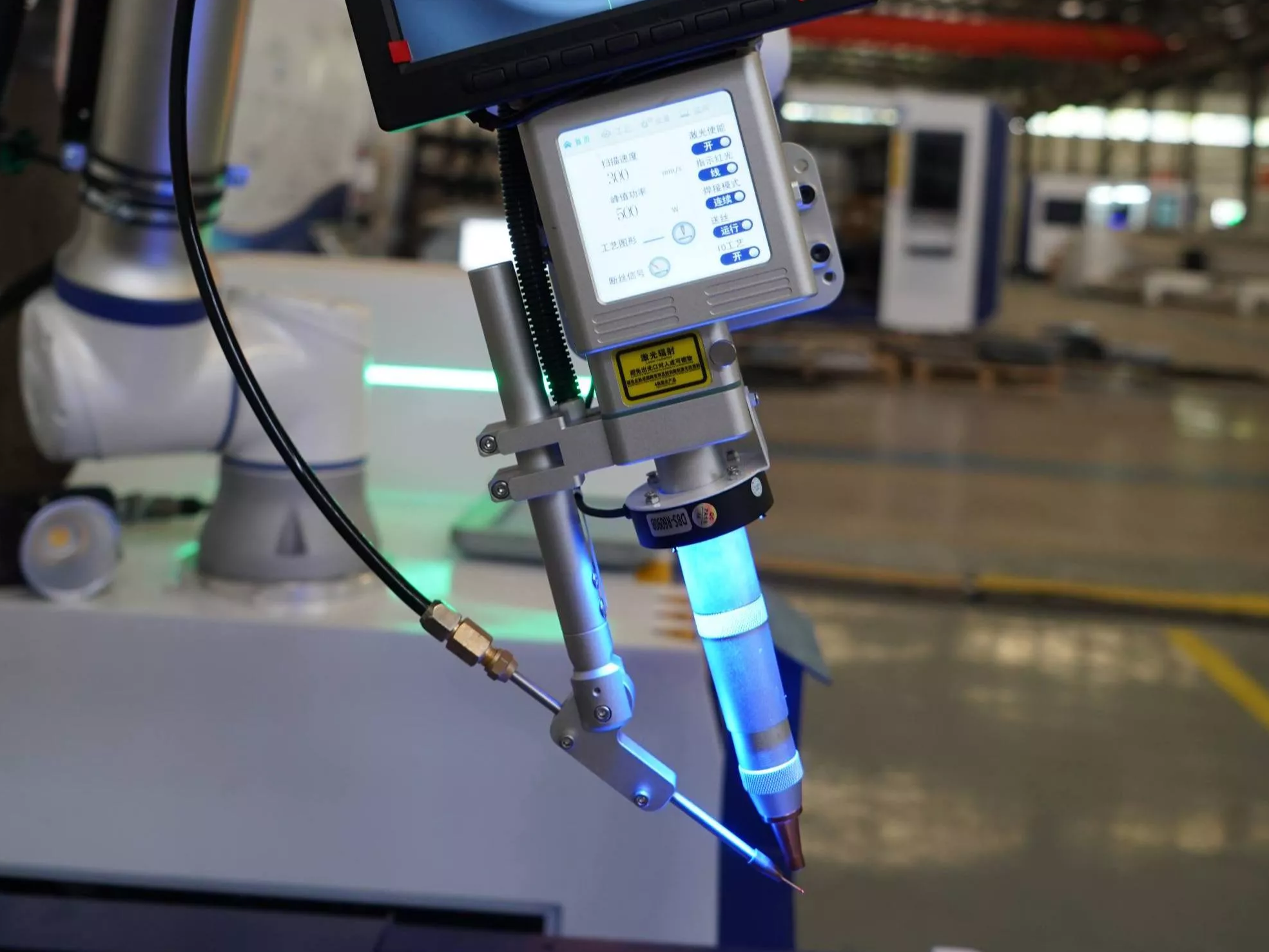
Modern fiber laser welding machines from DATO offer power ranges from 300W for precision applications up to 12kW for heavy industrial welding, with each power level serving specific application needs. The key is matching this power to your specific requirements rather than simply assuming more power is always better.
Conduction vs. Keyhole Welding Modes
The laser power you select directly influences which welding mode your process will operate in:
Conduction Mode Welding occurs at lower power densities (typically below 10⁶ W/cm²) and creates shallower, wider welds with minimal penetration. This mode is excellent for thin materials, heat-sensitive components, and applications where cosmetic appearance is critical. The weld pool remains relatively stable, with heat transfer occurring primarily through thermal conduction.
Keyhole Mode Welding happens at higher power densities (above 10⁶ W/cm²) and creates a vapor capillary or "keyhole" that allows the laser beam to penetrate deeply into the material. This mode enables deep, narrow welds with high aspect ratios (depth-to-width) and is ideal for thicker materials and applications requiring maximum penetration.
Understanding which welding mode best suits your application is a crucial first step in determining your optimal laser power requirements.

Key Factors That Determine Your Laser Power Requirements
Material Type and Properties
Different materials have unique thermal and optical properties that significantly impact laser power requirements:
Thermal Conductivity: Materials with high thermal conductivity (like copper and aluminum) quickly dissipate heat away from the weld zone, requiring higher laser power to maintain sufficient temperature for melting. For example, welding 1mm aluminum might require 2-3 times the power needed for the same thickness of stainless steel.
Reflectivity: Highly reflective materials like copper, gold, and aluminum can reflect up to 98% of the laser energy at room temperature, necessitating higher initial power to establish a weld pool. Once the material begins melting, absorption dramatically improves. DATO's fiber laser welding machines feature advanced power ramping capabilities to overcome this initial reflectivity challenge.
Melting Point: Materials with higher melting points naturally require more energy to reach fusion temperature. Tungsten (melting point 3422°C) requires significantly more power than zinc (melting point 419°C) for the same weld geometry.
Material Composition: Alloy elements can dramatically affect welding behavior. For example, certain aluminum alloys containing magnesium and silicon have lower melting point constituents that can vaporize during welding, potentially causing porosity if laser power isn't properly controlled.
Material Thickness and Joint Configuration
The physical dimensions of your workpiece play a crucial role in determining laser power requirements:
Material Thickness: As a general rule, thicker materials require higher laser power to achieve full penetration. For fiber laser welding of steel, a common industry guideline suggests approximately 100-150W of laser power per 0.1mm of penetration depth, though this varies based on material properties and joint design.
Joint Configuration: Butt joints typically require more precise power control than lap joints, as there's less margin for error in beam positioning. T-joints and corner joints may require specific power profiles to ensure proper fusion at the intersection points.
Fit-Up and Gap Tolerance: Tighter fit-up tolerances allow for more efficient power utilization. Gaps between parts may require additional power or beam oscillation techniques to ensure proper bridging and fusion.
Welding Speed Requirements
There's a direct relationship between laser power and potential welding speed:
Production Volume Considerations: Higher production volumes often necessitate faster welding speeds, which in turn require higher laser power to maintain adequate energy density at the weld zone.
Speed-Power Balance: For a given material and thickness, there's typically a linear relationship between power and speed. Doubling your laser power often allows you to approximately double your welding speed while maintaining similar weld characteristics.
Minimum Speed Limitations: Very slow welding speeds can cause excessive heat input and wider heat-affected zones, potentially leading to distortion or material property changes. Sufficient laser power ensures you can maintain optimal welding speeds.
Our DATO laser welding systems feature advanced processing parameter libraries that help you quickly identify the optimal speed-power relationship for your specific application.
Surface Condition and Preparation
The condition of your workpiece surface significantly impacts how efficiently laser energy is absorbed:
Surface Roughness: Rougher surfaces typically absorb laser energy more efficiently than polished surfaces, potentially reducing power requirements. However, excessive roughness can lead to inconsistent welds.
Surface Contaminants: Oils, oxides, and coatings can dramatically alter laser absorption. Some coatings increase absorption (like certain oxides), while others (like oils) can vaporize explosively and cause weld defects if laser power isn't properly adjusted.
Cleanliness Requirements: For critical applications like medical device manufacturing or aerospace components, pristine surfaces may be required, affecting how laser power interacts with the material.
DATO's laser welding machines include advanced adaptive power control systems that can help compensate for varying surface conditions, ensuring consistent weld quality even when surface preparation isn't perfectly uniform.
Practical Methods for Determining Optimal Laser Power
Empirical Testing and Process Development
The most reliable way to determine optimal laser power is through systematic testing:
Parameter Matrix Testing: Create a test matrix varying power, speed, focus position, and other key parameters to identify the optimal processing window for your specific application.
Weld Cross-Section Analysis: Metallurgical examination of weld cross-sections reveals penetration depth, weld width, and potential defects, helping you fine-tune power settings.
Mechanical Testing: Tensile, bend, and fatigue testing of welded samples confirms that your selected power parameters produce joints that meet your mechanical requirements.
At DATO's application development centers, we offer comprehensive weld testing services to help customers identify optimal processing parameters before investing in equipment.
Theoretical Calculations and Modeling
While empirical testing is essential, theoretical approaches can provide valuable starting points:
Energy Input Calculations: For simple applications, you can estimate required power using the formula: Power = (Material Volume × Energy Required Per Unit Volume) ÷ Time
Heat Flow Modeling: Advanced simulation software can model how heat flows through your specific joint configuration, helping predict required power levels for different materials and thicknesses.
Process Parameter Databases: DATO's laser welding machines come with extensive parameter libraries developed through thousands of application tests, providing excellent starting points for common material combinations.
Industry Standards and Guidelines
Several industry resources provide guidelines for laser power selection:
AWS D17.1: The American Welding Society's specification for fusion welding of aerospace applications includes guidelines for laser welding power selection.
DVS Technical Codes: The German Welding Society publishes technical guidelines for laser welding of various materials, including recommended power ranges.
Material-Specific Standards: Industry-specific standards for automotive, medical device, and electronics manufacturing often include recommended laser welding parameters for common applications.
Advanced Considerations for Laser Power Selection
Pulsed vs. Continuous Wave Operation
Modern laser welding machines offer different operating modes that affect how power is delivered:
Continuous Wave (CW) Operation: Delivers steady, uninterrupted laser power and is typically used for higher-speed welding of thicker materials. Power requirements are straightforward to calculate based on material properties and thickness.
Pulsed Operation: Delivers laser energy in discrete pulses, with power levels often described in terms of peak power, average power, and pulse energy. Pulsed welding is excellent for heat-sensitive applications but requires more complex power calculations.
Quasi-Continuous Wave: A hybrid approach that combines aspects of both CW and pulsed operation, offering fine control over heat input while maintaining good productivity.
DATO's advanced fiber laser welding systems offer all three operating modes, providing maximum flexibility for diverse applications.
Beam Quality and Focus Considerations
Laser power must be considered alongside beam quality for a complete understanding of your requirements:
Beam Parameter Product (BPP): This measure of beam quality affects how tightly your laser beam can be focused. Lower BPP values (better beam quality) allow for smaller spot sizes and higher power density, potentially reducing overall power requirements.
Spot Size Control: The ability to adjust your focal spot size allows you to optimize power density for different applications without necessarily changing laser power.
Working Distance Requirements: Applications requiring longer working distances (distance from the focusing optics to the workpiece) may need higher raw power to compensate for the limitations on how tightly the beam can be focused.
Multi-Material and Challenging Applications
Some applications present unique power requirement challenges:
Dissimilar Material Welding: Joining different materials often requires precisely controlled power to manage the different thermal properties of each material. For example, welding aluminum to steel typically requires carefully tailored power profiles to manage the formation of brittle intermetallic compounds.
Highly Reflective Materials: Materials like copper and gold may require significantly higher initial power to establish a weld pool, after which power can be reduced.
Crack-Sensitive Alloys: Some alloys are prone to hot cracking if cooled too rapidly. These materials may benefit from specific power modulation techniques rather than simply increasing raw power.
Implementing Your Laser Power Selection
Equipment Selection Considerations
Once you've determined your power requirements, selecting the right equipment becomes crucial:
Power Overhead: It's generally advisable to select a laser with 20-30% more power than your calculated minimum requirement. This provides processing flexibility and accommodates potential future applications with higher power demands.
Power Stability: The stability of your laser's power output over time is often as important as the raw power rating. DATO's fiber laser welding systems feature industry-leading power stability of ±1% to ensure consistent weld quality.
Power Control Range: Consider how flexibly you can adjust power settings. Modern fiber lasers typically offer excellent power adjustability from 10% to 100% of rated power, providing versatility for different applications.
Process Monitoring and Quality Control
Implementing proper monitoring ensures your selected power levels consistently produce quality welds:
Real-Time Power Monitoring: Advanced systems monitor actual delivered power at the workpiece, ensuring it matches your setpoint despite potential variations in fiber transmission efficiency or optics condition.
Weld Quality Verification: Techniques like in-process spectroscopy can detect when power levels are inadequate for proper material fusion, allowing for immediate adjustments.
Process Documentation: For critical applications, documenting actual power delivery for each weld provides traceability and quality assurance.

Conclusion: Partnering for Optimal Laser Welding Success
Determining the optimal laser power requirements for your specific welding applications involves careful consideration of material properties, joint design, production requirements, and quality standards. While this guide provides a comprehensive framework, each application has unique characteristics that may require specialized expertise.
At DATO and Leapion, our team of laser welding specialists has been helping manufacturers optimize their laser welding processes since 2007. With our extensive range of fiber laser welding machines—from precision 300W systems to powerful 12kW industrial welders—we can help you identify the perfect power configuration for your specific needs.
Our application development centers offer comprehensive testing services to validate your power requirements before equipment investment, and our 120-person research team continuously develops new processing techniques to address even the most challenging welding applications.
Whether you're new to laser welding or looking to optimize an existing process, understanding and correctly implementing the right laser power is the foundation of welding success. Contact our team today to discuss your specific application requirements and discover how DATO's advanced laser welding technology can transform your manufacturing capabilities.