


Key Advantages
DT-HJR Robotic Laser Welding Machine Parameters
Item
Specification
Model
Handheld Laser Welding Cleaning Cutting Machine
Robot Type
6-axis collaborative robot
Laser Power
1000W / 1500W / 2000W / 3000W, if confirmed
Welding Mode
Continuous / modulation
Output Central Wavelength
1070±20 nm
Cooling Method
Water cooling
Welding Width
0-5mm
Wire Diameter
0.8 / 1.0 / 1.2 / 1.6 mm
Max Wire Feeding Speed
100 mm/s
Supported Materials
Stainless steel, carbon steel, galvanized sheet, aluminum alloy, iron, and other suitable metals
Optional Upgrade
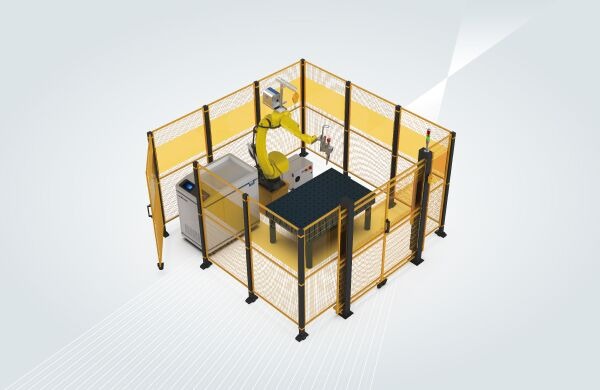
Smoke purifier, safety enclosure, gun cleaning system, wire cutting system
Who Should Choose the DT-HJR?
Buyer Type
Why DT-HJR Fits
Sheet metal fabrication factories
Automates repeated welding of cabinets, enclosures, panels, and brackets
Kitchen and bathroom product manufacturers
Suitable for stainless steel products, seams, corners, and visible welds
Rail transit and machinery manufacturers
Supports repeatable welding paths for structural components
Advertising product manufacturers
Welds metal frames, signs, and display structures
Workshops with welder shortages
Reduces dependence on manual welding skill
Batch production users
Improves consistency for repeated parts when fixtures are stable
DT-HJR Robotic vs DT-HJ Handheld Laser Welding
Item
DT-HJ Handheld
DT-HJR Robotic
Operation
Manual handheld welding
Programmed robotic welding
Best For
Flexible repair, small batches, varied workpieces
Repeated parts and batch production
Welding Consistency
Depends on operator skill
More repeatable with proper fixtures
Automation Level
Low
High
Fixture Requirement
Lower
Higher
Typical Users
Small workshops, repair users
Factories, batch production, automation users
DT-HJR Automatic Laser Welding Machine Collaborative Robot Video

6-Axis Collaborative Robotic Welding Arm
The 6-axis collaborative robot provides flexible movement for different welding paths and workpiece shapes. It can help automate repeated welding tasks and improve consistency compared with manual welding.
The robotic arm is suitable for straight welds, curved paths, fillet welds, lap welds, spot welds, and other repeatable welding processes. Final welding performance depends on fixture design, part consistency, welding parameters, and operator setup.
Robotic Laser Welding Advantages
● Consistent Welding Quality
The robot follows programmed welding paths with stable movement and repeatable positioning. This helps improve weld consistency for batch production.
● Reduced Heat Distortion
Laser welding uses concentrated heat input, helping reduce deformation for many sheet metal and precision welding applications.
● Flexible Welding Processes
The DT-HJR can support fillet welding, lap welding, seam welding, spot welding, surfacing welding, and other common metal welding processes.
● Lower Dependence on Skilled Welders
Robotic welding helps reduce the impact of manual skill differences and supports more stable production output.


Automatic Laser Welding Head
The automatic laser welding head delivers concentrated laser energy for fast and stable metal welding. It supports smooth weld seams, narrow heat-affected zones, and reduced post-weld grinding for many suitable applications.
The welding head can be configured with wire feeding and different nozzles according to joint type, material, and welding requirements.
Fiber Laser Source
The DT-HJR can be configured with Raycus, MAX, IPG, or other fiber laser source options according to customer requirements. Laser power should be selected based on material type, welding thickness, joint design, production speed, and weld quality requirements.
Higher laser power can support thicker welding applications or faster welding speed under suitable conditions.


Smart Robotic Welding Control System
The smart control system manages robot movement, welding parameters, wire feeding, and production programs. It supports modular, customized, automated, and data-driven welding solutions for different workpieces and production requirements.
Robotic Laser Welding Machine Applications


Robotic Laser Welding Materials and Sample Applications


DT-HJR Robotic Laser Welding Machine FAQs
What is the DT-HJR robotic laser welding machine used for?
The DT-HJR is used for automated metal welding with a 6-axis collaborative robot. It is suitable for repeated welding tasks in sheet metal fabrication, kitchenware, rail transit, building materials, advertising products, and machinery manufacturing.
What is the advantage of robotic laser welding?
What materials can the DT-HJR weld?
What laser power options are available?
Is a robotic laser welding machine suitable for small batches?
Get a Robotic Laser Welding Solution
Tell us your material, thickness, workpiece size, joint type, welding path, production volume, and automation requirements. Dato will recommend the suitable DT-HJR robot model, laser power, welding head, wire feeder, fixture plan, safety protection, and workstation layout.